Joseph Bramah
The press of 1795, and a lock in the window
The 1911 Encyclopaedia Britannica says Joseph Bramah was the son of a farmer, born at Stainborough, Yorkshire, on 13 April 1748. An accident to his ankle incapacitated him for agricultural labour. When his indentures expired he worked as a cabinet-maker in London, and then started business on his own account.
The IMechE tells a close, but not identical, opening. Bramah was born in Yorkshire in 1748 — “some accounts say 1749.” He started out as a farm labourer until his interest turned to woodwork. Apprenticed to a local carpenter, he walked to London and found work as a cabinetmaker, and one of his jobs was to fit water closets. Those two official beginnings are both kept here. This site does not pick a favourite year, or quietly drop the walk to London. [source] [source]
His first patent, both accounts agree, was for a water closet, in 1778. The 1911 Britannica calls it “some improvements in the mechanism of water-closets.” The IMechE adds a later, careful rumour: “Apparently, one of these can be found working in Queen Victoria’s residence, Osborne House on the Isle of Wight.” The word is apparently, and it stays in the sentence. [source] [source]
Pumps and water supply led him, the IMechE says, into the brewing industry, and to the problem of serving fresh beer in taverns. He devised a method of pumping beer from the cellar to the parlour. “The principle of his invention was that if pressure is applied to a contained fluid it will move rather than compress.” The system used sets of casks connected to a forcing pump, a water cistern for cleaning, and pressure applied “to the stored alcohol by a loaded piston.” In the same patent he specified “a new method for extruding tin and lead under pressure to make continuous pipes,” which he intended to use in the beer pumping system. [source]
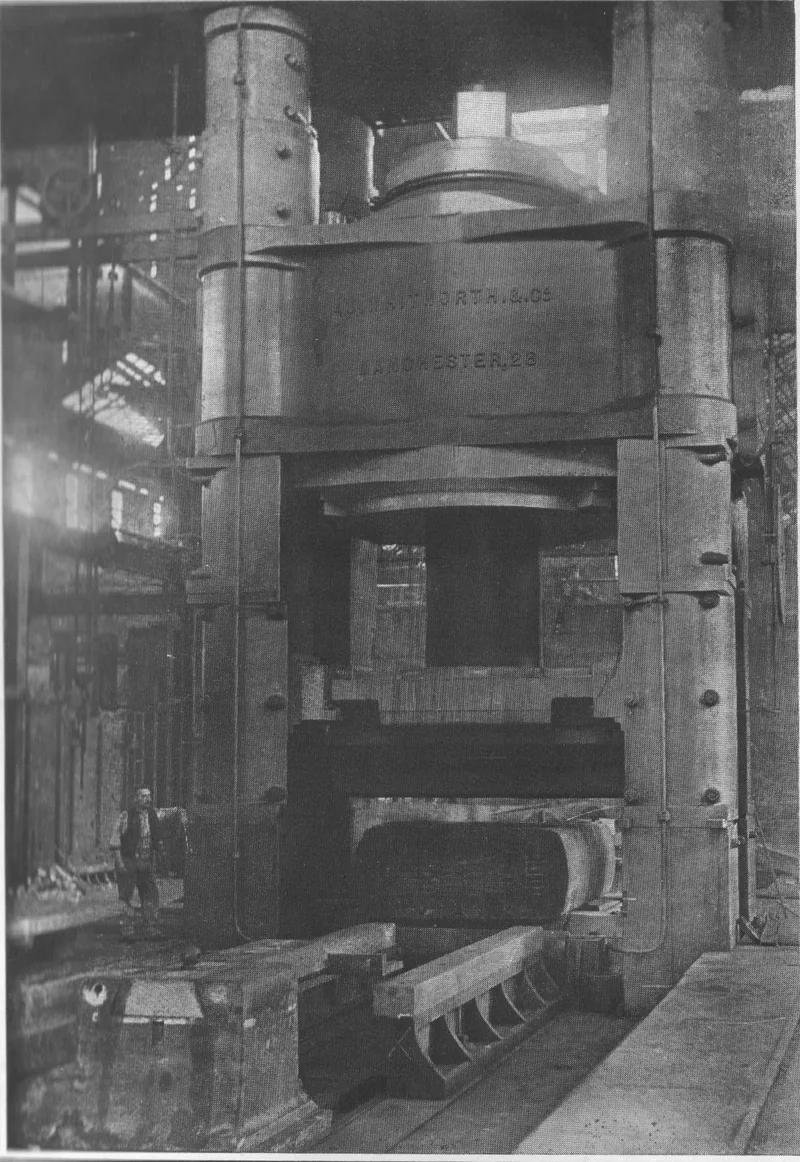
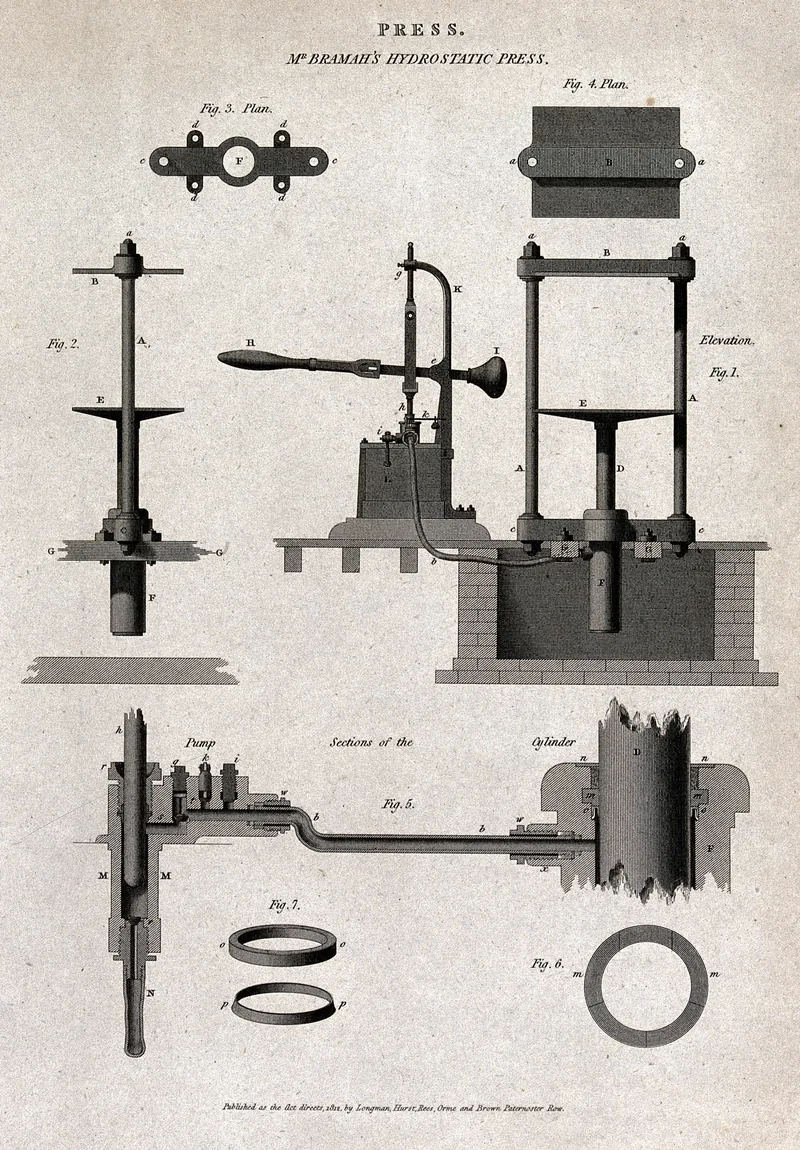
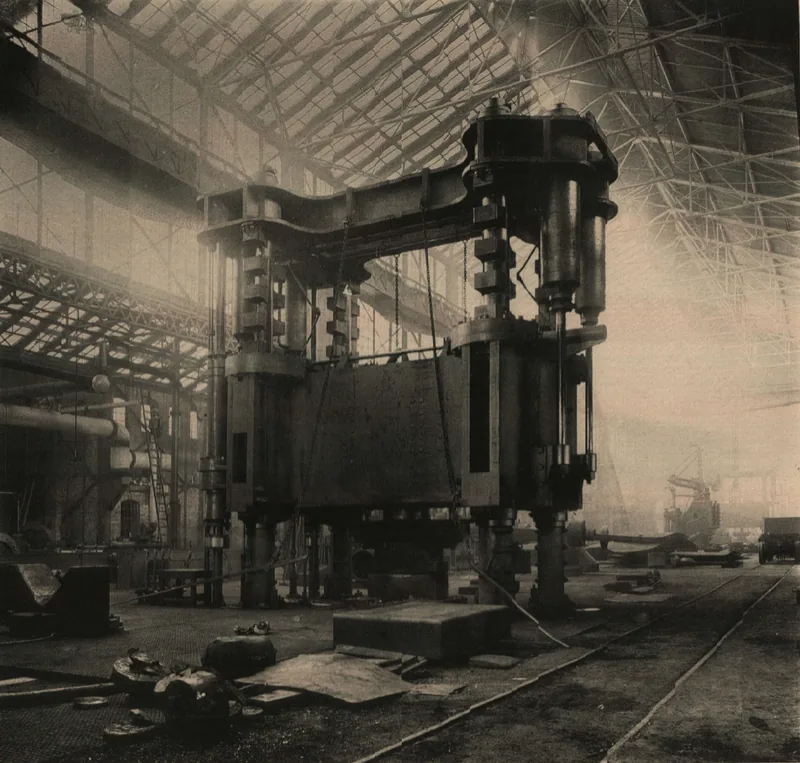
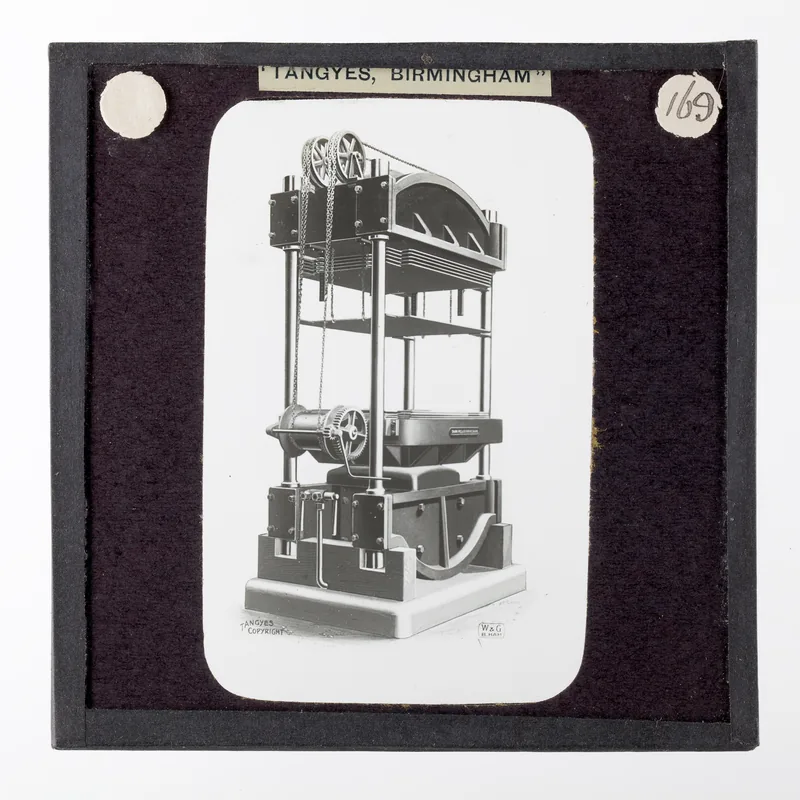
The hydraulic press, the IMechE says, is considered his most important invention. The 1911 Britannica says that in 1795 he invented it. The IMechE dates the patent to the same year, and describes the machine: two cylinders and pistons of different areas, a force on the small one translated into a larger force on the large one, in proportion to the areas, “in a similar way to that in which a lever is used.” [source] [source]
A press is only as good as the seal that keeps the liquid in. For “the collar which secured water-tightness between the plunger and the cylinder in which it worked,” the 1911 Britannica says Bramah “was indebted to Henry Maudslay, one of his workmen,” who also helped him in designing machines for the manufacture of his locks. The IMechE places Maudslay in a longer workshop list: by the late 1770s Bramah had established his own workshop, which trained several famous engineers, including Henry Maudslay, Joseph Clement and Joseph Whitworth. [source] [source]
The 1911 article then keeps going, because Bramah did. In 1784 he patented “the lock known by his name.” In 1806 he devised for the Bank of England “a numerical printing machine, specially adapted for bank-notes.” Other inventions included the beer-engine, machinery for making aerated waters, planing machines, and improvements in steam-engines and boilers and in paper-making machinery. In 1785 he suggested “the possibility of screw propulsion for ships,” and in 1802 “the hydraulic transmission of power.” He constructed waterworks at Norwich in 1790 and 1793. [source]
The lock has its own theatre. The IMechE says the Challenge Lock was finished in 1790 and stood in the shop window with a prize of 200 guineas for anyone who could pick or open it. It was not until 1851, during the Great Exhibition, that the American locksmith Alfred Charles Hobbs managed it, “in more than 50 hours across 16 days.” The lock can be viewed in the Science Museum in London, “although it has been rebuilt since Hobbs picked it.” Bramah’s first patented lock, the same article says, was developed in 1784 “and made by Bramah Locks, a firm that is still in business.” [source]
One of Bramah’s last inventions, the IMechE says, was “a hydrostatic press capable of uprooting trees.” While working in Holt Forest, Hampshire, he caught pneumonia. “He died there on 9 December 1814.” The 1911 Britannica gives the same date, and a different place: “He died in London on the 9th of December 1814.” Both sentences are official. This site does not choose between Holt Forest and London. [source] [source]
Enjoyed this hydraulics desk?
No pop-ups. No intrusive advertising. Just interesting stuff. A little support helps the next mechanics.im site get built.