Pascal’s principle
A small push, a bigger one
Press on a liquid in a closed vessel and the liquid, as the IMechE puts it when it describes Bramah’s beer pump, will move rather than compress. The 1911 Britannica says the same thing with a surveyor’s care: very great changes of pressure change the volume of liquids only by a small amount.
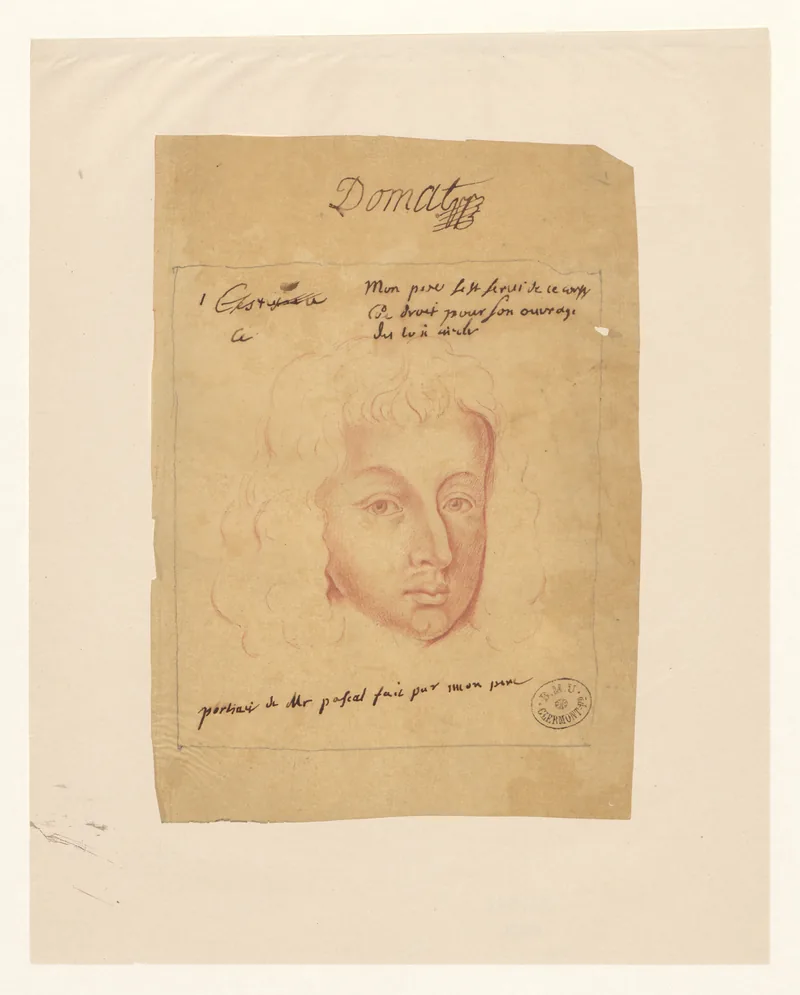
Pascal’s treatise on the equilibrium of fluids was written, the 1911 Britannica says, before 1651, and published in 1663. His experiments and that treatise “entitle him to rank with Galileo and Stevinus as one of the founders of the science of hydrodynamics.” Hydrodynamics is the word on that page. This site does not quietly update it to the modern classroom word hydrostatics. [source]
The same official page then tells a story that still feels like a dare. The idea of the pressure of the air, and the instrument for measuring it, “were both new” when Pascal made his famous experiment, “showing that the height of the mercury column in a barometer decreases when it is carried upwards through the atmosphere.” He made the experiment himself in a tower at Paris. It was carried out on a grand scale, under his instructions, by his brother-in-law Florin Périer on the Puy de Dôme in Auvergne. Its success, the 1911 article says, “greatly helped to break down the old prejudices, and to bring home to the minds of ordinary men the truth of the new ideas propounded by Galileo and Torricelli.” [source]
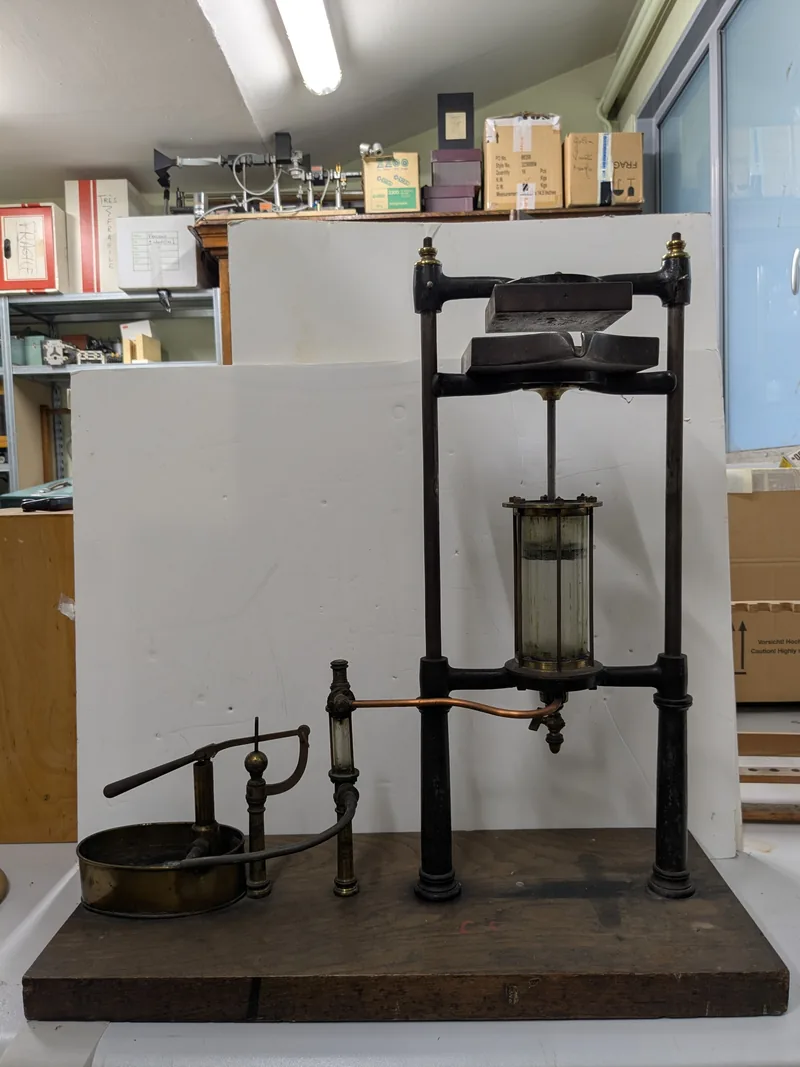
A century and more later, the IMechE describes the principle as Bramah used it: “pressure throughout a closed system is constant.” If you push on a small piston, the pressure in the liquid is the same at the large one. Force follows area. The cylinders, the Institution says, “act in a similar way to that in which a lever is used to increase the force exerted.” [source]
The 1911 article “Hydraulics” never names Pascal in the sentences quoted here. It starts further back, with a requirement of the fluid itself. The parts of a fluid “act on each other with a pressure which is exactly or very nearly normal to the interface which separates them. The stress must be a pressure, not a tension, or the parts would separate. Further, at any point in a fluid the pressure in all directions must be the same; or, in other words, the pressure on any small element of surface is independent of the orientation of the surface.” [source]
That article then divides fluids into liquids, “or incompressible fluids,” and gases, “or compressible fluids.” The incompressibility is not a miracle. “Very great changes of pressure change the volume of liquids only by a small amount, and if the pressure on them is reduced to zero they do no” — the sentence continues on that page, and this site does not tidy the cut. The point for a press is already there: a liquid will take a push and move it, almost without shrinking. [source]
Two official wordings, kept apart
The IMechE, writing about Bramah’s press, and the 1911 Encyclopaedia Britannica article “Hydraulics,” describe pressure in a fluid in language that is close, but not the same. This desk keeps each wording on its own side.
| IMechE, on Pascal’s principle and the press | Encyclopaedia Britannica, 1911, “Hydraulics” | |
|---|---|---|
| The pressure itself | Pascal’s principle, “that pressure throughout a closed system is constant.” | “At any point in a fluid the pressure in all directions must be the same; or, in other words, the pressure on any small element of surface is independent of the orientation of the surface.” |
| What follows | Bramah’s press had two cylinders and pistons of different cross-sectional areas. A force on the smaller piston “would be translated into a larger force on the larger piston.” The difference “would be proportional to the difference in area of the two pistons.” | The same article divides fluids into liquids, “or incompressible fluids,” and gases, “or compressible fluids,” and notes that “very great changes of pressure change the volume of liquids only by a small amount.” |
The example ratios on the desk above — 2×, 5×, 10×, 20× — are illustrations of that area rule. They are not measurements taken from Bramah’s press, or from any other historic machine. Notes about the exact wording live on the sources and field-notes pages.
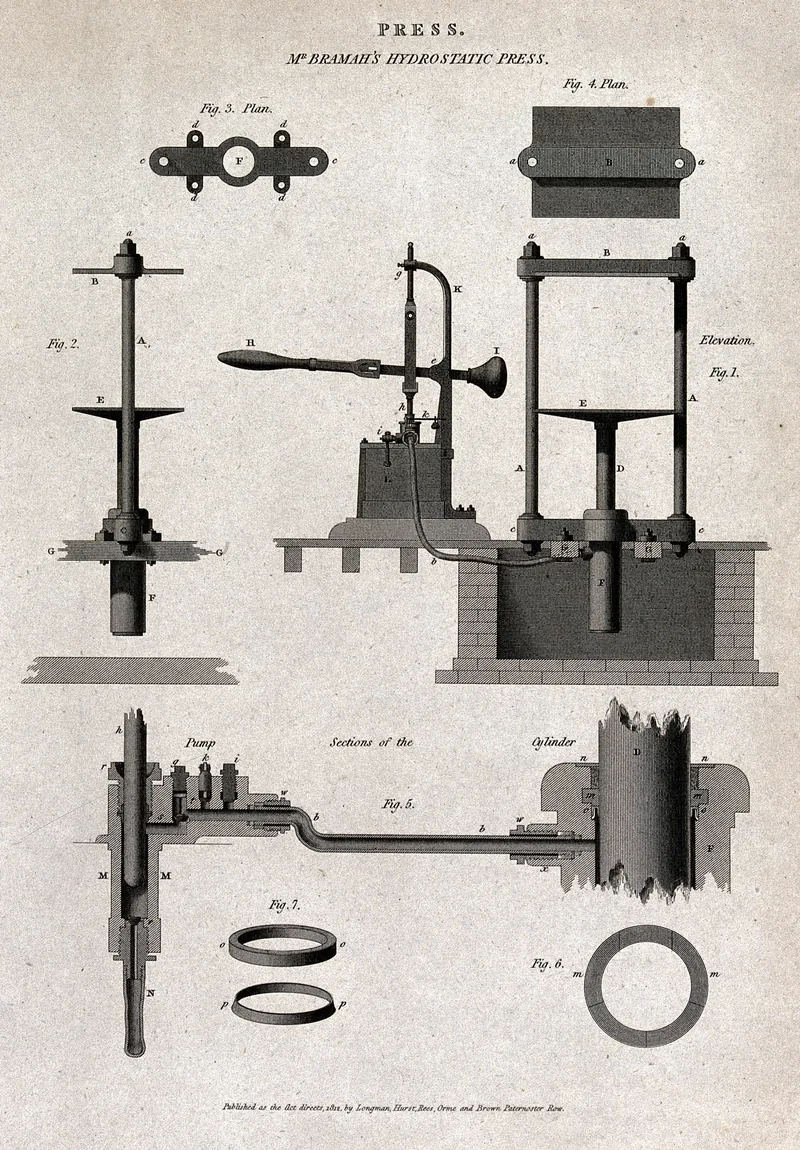
The multipliers on the home-page desk — 2×, 5×, 10×, 20× — are only illustrations of that area rule. They are not measurements of Bramah’s press, or of the teaching machine in Lyon, or of any other historic cylinder. What the IMechE gives is the proportion, not a number of tons. [source]
Enjoyed this hydraulics desk?
No pop-ups. No intrusive advertising. Just interesting stuff. A little support helps the next mechanics.im site get built.