For families
A liquid lever, a lock in a window, a crane on the mains
Hydraulics sounds like a workshop word. The official stories behind it are easy to tell at a kitchen table, as long as they stay true to what the sources actually say.
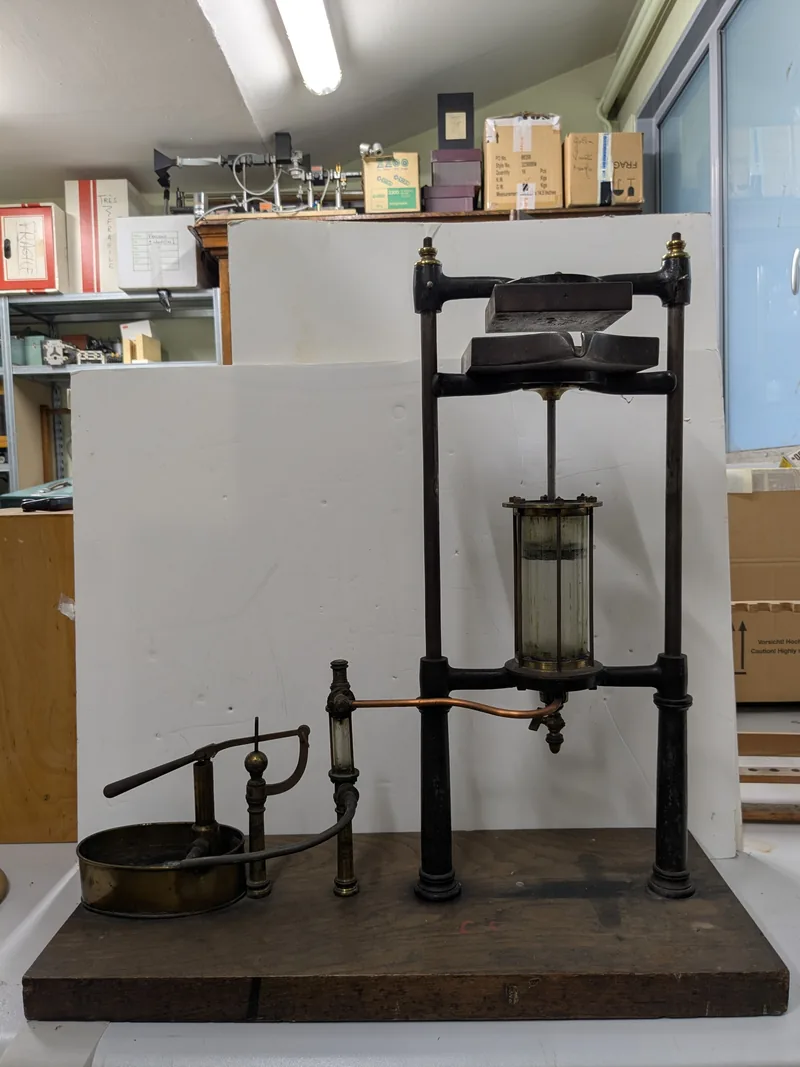
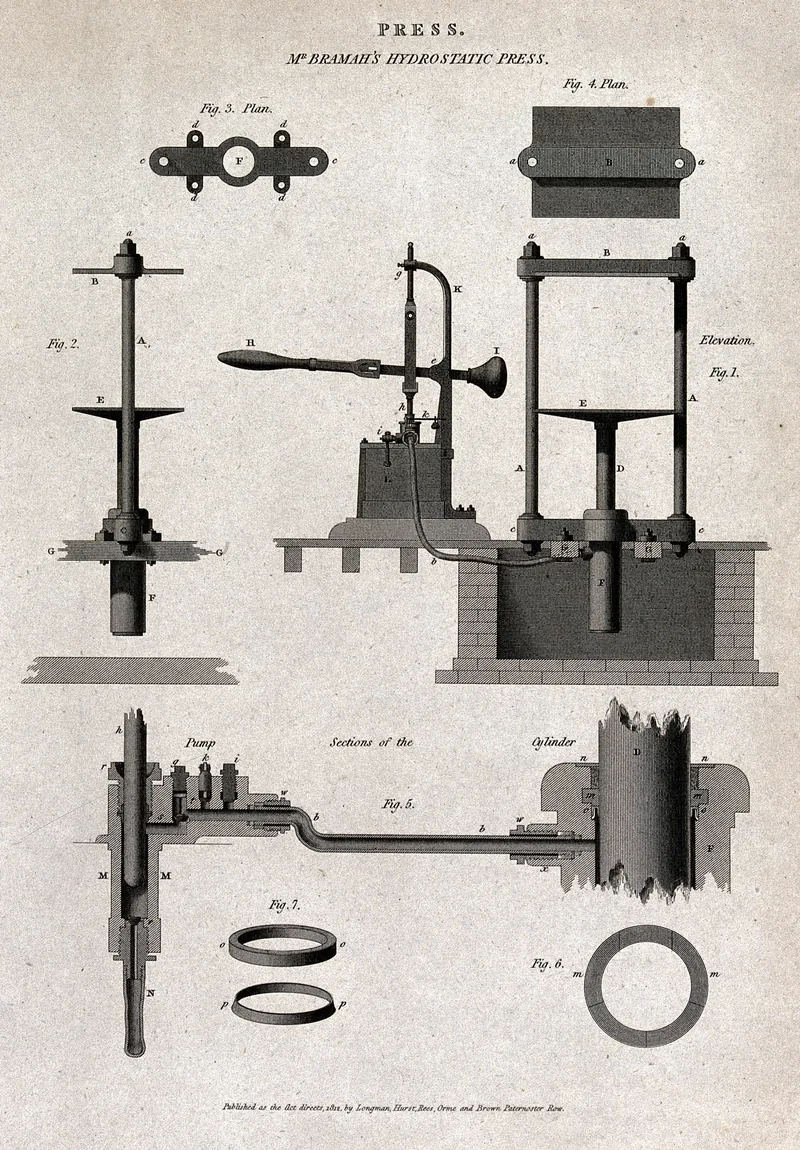
Imagine two pistons, a small one and a large one, joined by a pipe full of liquid. Push on the small one and the liquid carries the push to the large one. Because the large piston has more area, the push there is bigger. The IMechE says Bramah’s press worked like that in 1795, “in a similar way to that in which a lever is used.” The teaching press in the photograph is not Bramah’s own machine, but it shows the same idea. [source]
Why does the liquid not just shrink, like a sponge? The 1911 Britannica says very great changes of pressure change the volume of liquids only by a small amount. The IMechE, writing about a beer pump, puts it more briskly: if you press on a contained fluid, it will move rather than compress. [source] [source]
Bramah liked a challenge. In 1790, the IMechE says, he put a lock in his shop window and offered 200 guineas to anyone who could pick it. Nobody did, officially, until 1851, when a locksmith named Hobbs took more than fifty hours, spread across sixteen days. The lock you can see in the Science Museum has been rebuilt since. [source]
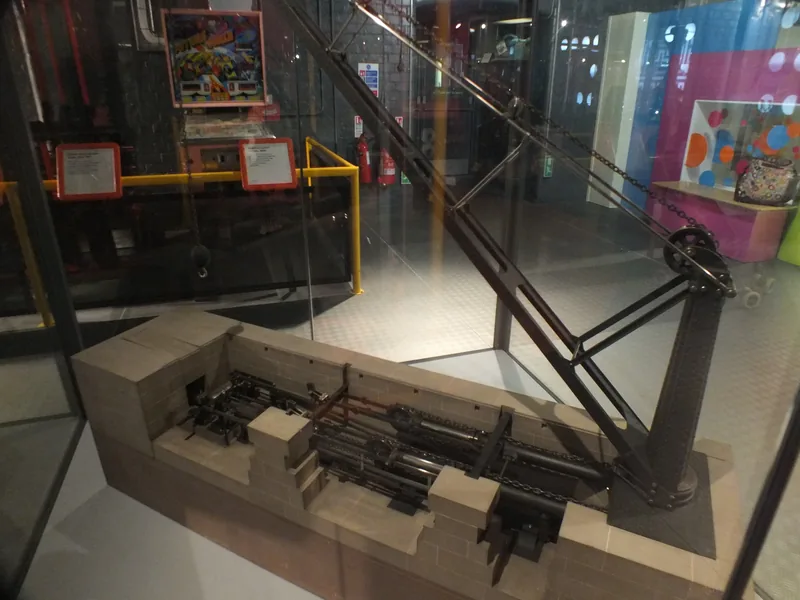
A generation later, in Newcastle, Armstrong built a crane that ran on the ordinary water mains — the same kind of water that came into houses. That is the 1911 Britannica’s story of 1846. When he needed more pressure, and there were no mains, he invented a loaded piston called an accumulator. The model in the photograph is a museum model, not the first quay crane, and the caption says so. [source]
At his house, Cragside, the National Trust says he turned water into light, and used the same sort of dock-side idea to push water up a hill. That is a good family ending, and it is the Trust’s wording, not a later flourish. [source]
Things to look for together
- On the home-page desk, try the 2×, 5×, 10× and 20× buttons. They are teaching examples, not historic measurements.
- On the facts page, find the two official places given for Bramah’s death, and talk about why this site keeps both.
- Print a free fact sheet and take it on a visit to a science museum, or just stick it on the fridge.
Enjoyed this hydraulics desk?
No pop-ups. No intrusive advertising. Just interesting stuff. A little support helps the next mechanics.im site get built.