hydraulics.mechanics.im
A small push, a bigger one
In 1795 Joseph Bramah was granted a patent for a hydraulic press. The IMechE, writing about that machine, puts Pascal’s principle in a short sentence: pressure throughout a closed system is constant. Two cylinders, two pistons, one liquid, and a small force becomes a large one.
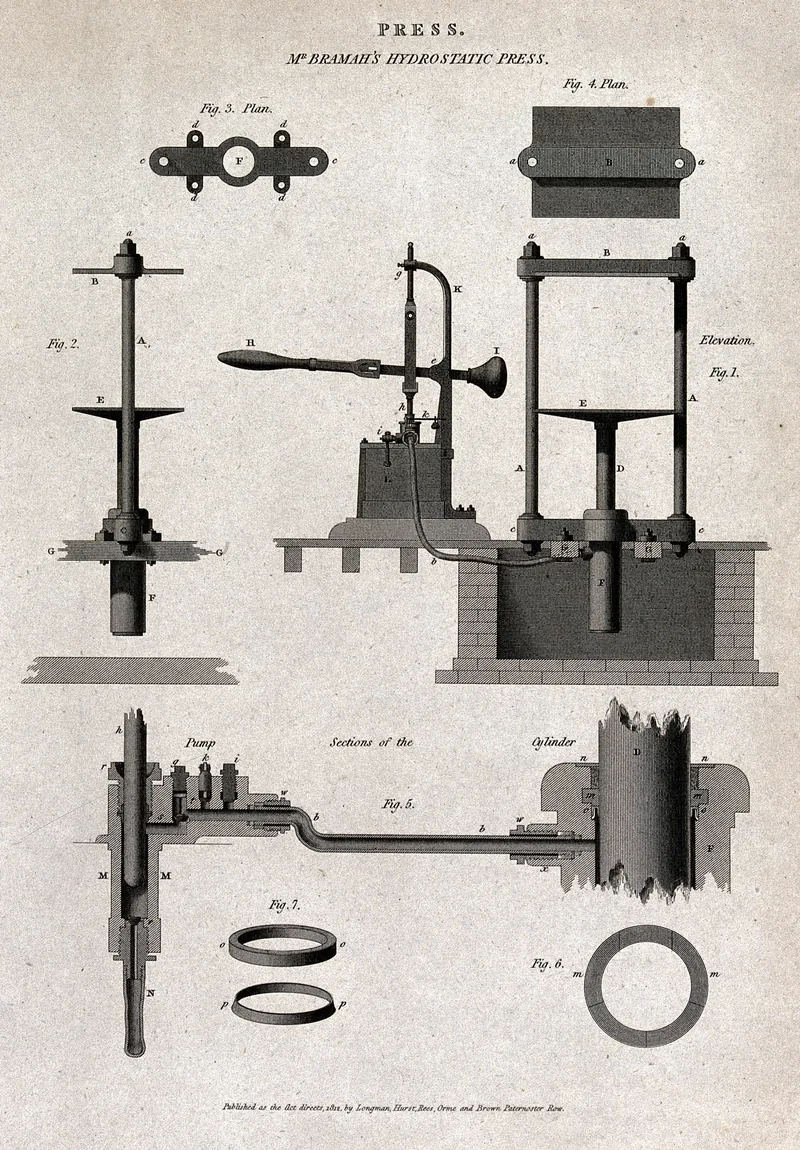
A small push, a bigger one
Example area ratios — illustrations, not measurements of a historic machine:
Pick a story. Pascal’s equal pressure, Bramah’s press of 1795, a lock that stood unpicked for sixty-one years, and a crane on the Newcastle quay that ran from the ordinary water mains.
The 1911 Encyclopaedia Britannica tells the same idea another way, in the article “Hydraulics”: “at any point in a fluid the pressure in all directions must be the same; or, in other words, the pressure on any small element of surface is independent of the orientation of the surface.” The two official wordings sit side by side on this site, and are not merged into one. [source] [source]
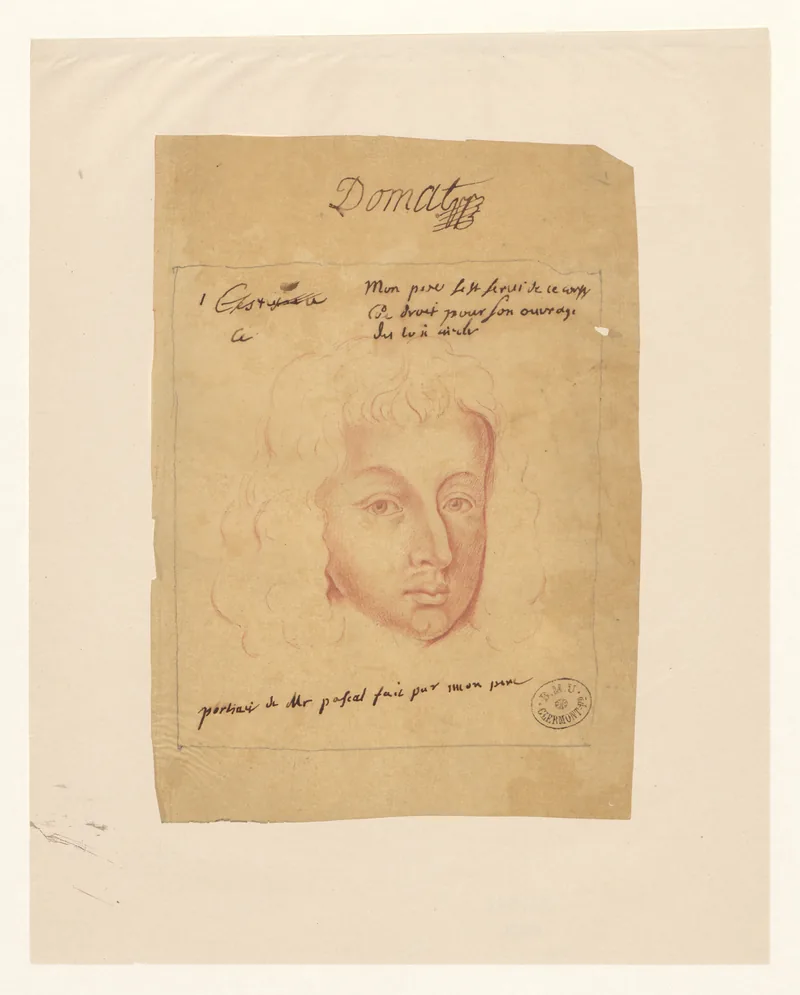
Blaise Pascal had already written a treatise on the equilibrium of fluids — written, the 1911 Britannica says, before 1651, and published in 1663. The same page ranks him with Galileo and Stevinus as one of the founders of the science of hydrodynamics, which is the 1911 word, left as it stands. His famous barometer experiment showed that the mercury column falls when the instrument is carried upwards through the atmosphere. He tried it in a tower in Paris; his brother-in-law Florin Périer carried it out on a grand scale on the Puy de Dôme in Auvergne. [source]
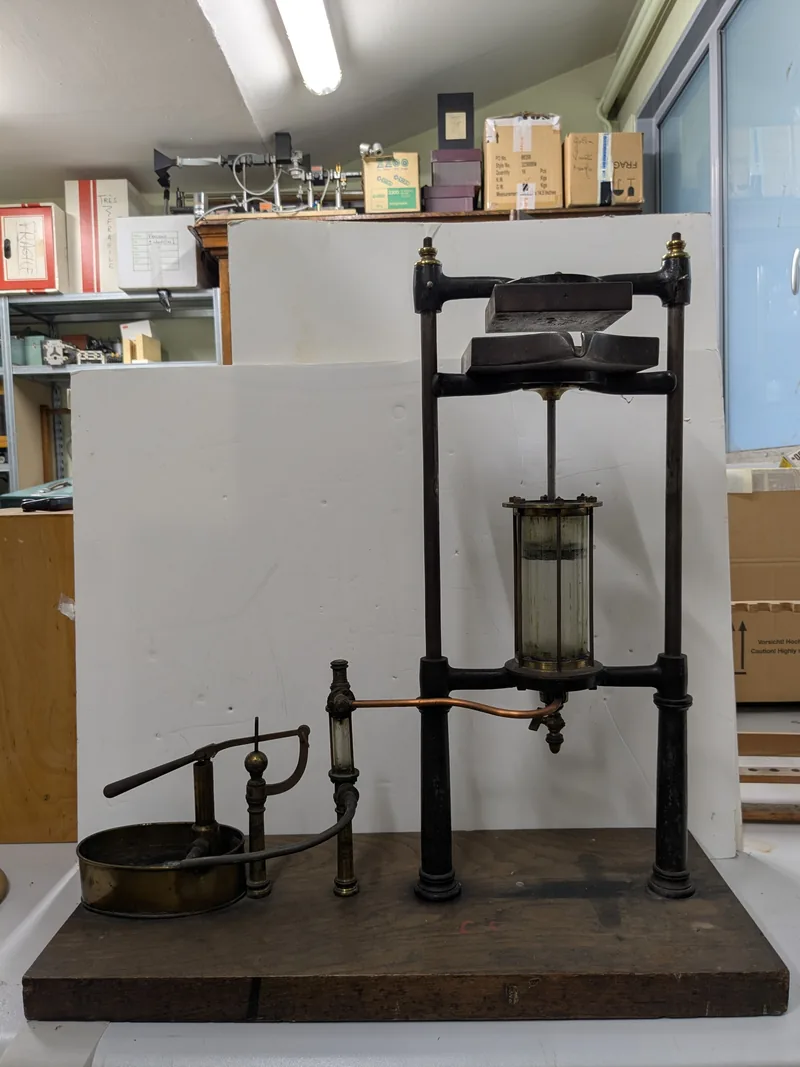
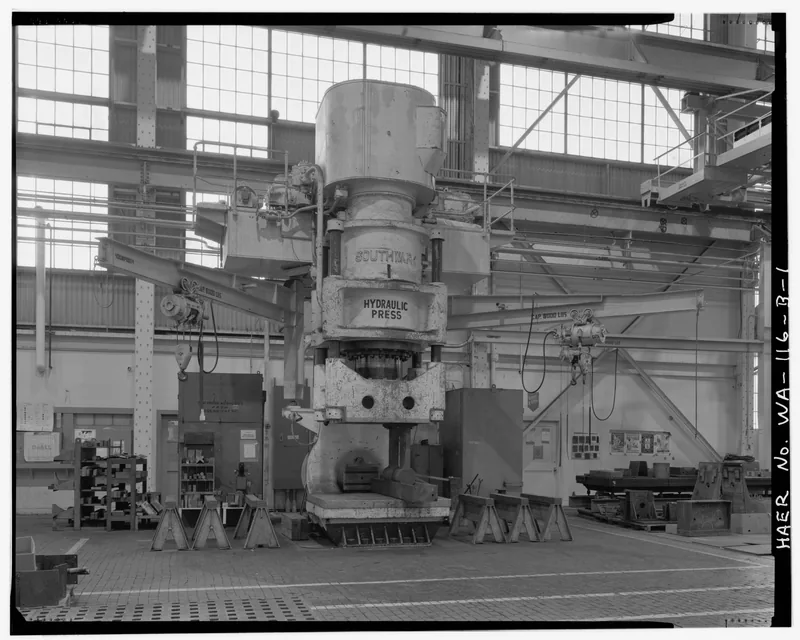
Bramah’s press put that quiet fact to work in a workshop. The IMechE says the press had two cylinders and pistons of different cross-sectional areas. A force on the smaller piston “would be translated into a larger force on the larger piston,” and the difference “would be proportional to the difference in area of the two pistons.” The teaching press in the photograph is not Bramah’s original. It still shows the same arrangement: a small pump, a pipe, a larger cylinder. [source]
Two official wordings, kept apart
The IMechE, writing about Bramah’s press, and the 1911 Encyclopaedia Britannica article “Hydraulics,” describe pressure in a fluid in language that is close, but not the same. This desk keeps each wording on its own side.
| IMechE, on Pascal’s principle and the press | Encyclopaedia Britannica, 1911, “Hydraulics” | |
|---|---|---|
| The pressure itself | Pascal’s principle, “that pressure throughout a closed system is constant.” | “At any point in a fluid the pressure in all directions must be the same; or, in other words, the pressure on any small element of surface is independent of the orientation of the surface.” |
| What follows | Bramah’s press had two cylinders and pistons of different cross-sectional areas. A force on the smaller piston “would be translated into a larger force on the larger piston.” The difference “would be proportional to the difference in area of the two pistons.” | The same article divides fluids into liquids, “or incompressible fluids,” and gases, “or compressible fluids,” and notes that “very great changes of pressure change the volume of liquids only by a small amount.” |
The example ratios on the desk above — 2×, 5×, 10×, 20× — are illustrations of that area rule. They are not measurements taken from Bramah’s press, or from any other historic machine. Notes about the exact wording live on the sources and field-notes pages.
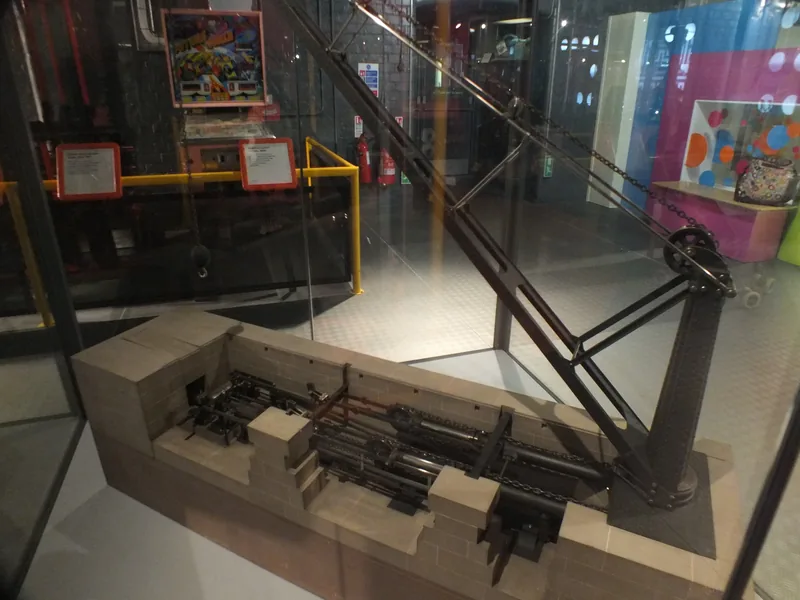
Half a century later, on the quay at Newcastle, William George Armstrong put the same kind of cylinder to a different job. The 1911 Britannica says his first hydraulic crane was erected there in 1846, and that “the necessary pressure was obtained from the ordinary water mains of the town.” The model in the photograph is an 1850 museum model at the Discovery Museum, not that first quay crane, but the official story of 1846 still has a hook in it: a dockside machine, running on the same water that filled the kettles. [source]
Enjoyed this hydraulics desk?
No pop-ups. No intrusive advertising. Just interesting stuff. A little support helps the next mechanics.im site get built.